Please Choose Your Language
close
Choose Your Site
Global
Social Media
Views: 0 Author: Site Editor Publish Time: 2026-06-25 Origin: Site


Engineers frequently face a critical challenge when specifying fasteners for highly corrosive, high-stress environments. Standard stainless steel often fails catastrophically in offshore, chemical, or desalination applications. These industries experience rapid localized corrosion and massive mechanical loads. You need materials capable of surviving these brutal conditions without compromise. This is where a specialized Super Duplex 2507 Nut (UNS S32750) enters the equation. It acts as a high-performance fastening solution. The alloy brilliantly combines the key benefits of both austenitic and ferritic metallurgical structures. By understanding its specific mechanical and chemical properties, you can actively prevent catastrophic field failures. Furthermore, this knowledge protects your project budget from unnecessary over-specification costs. In this guide, we will break down the exact performance thresholds and structural benefits you need to understand. You will learn precisely when to specify this premium alloy safely.
Extreme Pitting Resistance: 2507 boasts a PREN (Pitting Resistance Equivalent Number) of >42, making it virtually immune to chloride stress corrosion cracking.
High Yield Strength: The 2507 mechanical properties deliver nearly double the yield strength of standard 316L, allowing for lighter, more compact joint designs.
Cost-to-Performance Ratio: While carrying a higher upfront material cost than standard duplex (2205), 2507 significantly reduces lifecycle replacement costs in aggressive chloride and acidic environments.
Procurement Mandate: Authentic 2507 requires stringent validation; always demand Positive Material Identification (PMI) and full traceability (MTRs) to mitigate counterfeit risks.
Industrial buyers must understand material science before justifying premium costs. You need to know exactly why this alloy performs under severe pressure. Raw metallurgical data directly dictates field survivability. A highly engineered fastener relies on a precise 50/50 microstructure. It contains roughly equal parts austenitic and ferritic phases. This balanced phase structure delivers incredible dual benefits. The austenitic side provides necessary ductility and impact toughness. Meanwhile, the ferritic side contributes massive mechanical strength. They work together flawlessly to create a resilient joint.
We can look closely at the core chemical composition. Chromium makes up a massive 25% of the alloy. Molybdenum accounts for 4%. These two elements act as the primary drivers of extreme localized corrosion resistance. Nitrogen sits between 0.2% and 0.3%. It serves as a vital stabilizing element in the matrix. Nitrogen drastically improves overall structural integrity and prevents phase imbalances during cooling.
Standard evaluation criteria reveal impressive baseline specifications. You will typically see a Yield Strength of at least 80 ksi. Tensile Strength easily exceeds 116 ksi in standard testing. We must also monitor strict hardness limits to prevent cracking under vibration. The robust 2507 mechanical properties translate directly to high torque-handling capabilities. You can apply massive clamping forces safely. This prevents joint relaxation during intense operational cycles.
Element | Symbol | Typical Percentage (%) | Primary Function |
|---|---|---|---|
Chromium | Cr | 24.0 - 26.0 | Drives base oxidation and corrosion resistance. |
Molybdenum | Mo | 3.0 - 5.0 | Prevents localized pitting in chloride environments. |
Nitrogen | N | 0.24 - 0.32 | Boosts structural yield strength and stabilizes austenite. |
Nickel | Ni | 6.0 - 8.0 | Maintains necessary ductility and toughness. |
Engineers face a common dilemma at the bottom of the purchasing funnel. You must decide between adequate standard duplex and premium super duplex. This choice ultimately optimizes your Bill of Materials (BOM) budget. We need clear performance thresholds to guide this decision accurately. Standard 2205 duplex works perfectly well in many moderate environments. However, it reaches a dangerous tipping point under specific operational conditions.
When environmental temperatures rise above 150°F in high-chloride media, risks escalate rapidly. Standard duplex begins facing severe stress corrosion cracking (SCC) threats. Chlorides actively attack the micro-fissures created by tensile stress. This environmental trigger necessitates the immediate jump to a premium alternative. You must specify a UNS S32750 fastener here. It handles elevated heat and aggressive chlorides safely without cracking.
We must acknowledge the higher initial material cost immediately. The upfront premium often gives procurement teams serious pause. You should evaluate this through a lifecycle ROI lens instead. Compare the initial premium against potential unplanned downtime costs. A sudden joint failure incurs massive emergency recovery expenses. Premature replacement labor alone often dwarfs the initial fastener upgrade price. Paying for premium metallurgy upfront acts as proactive operational insurance.
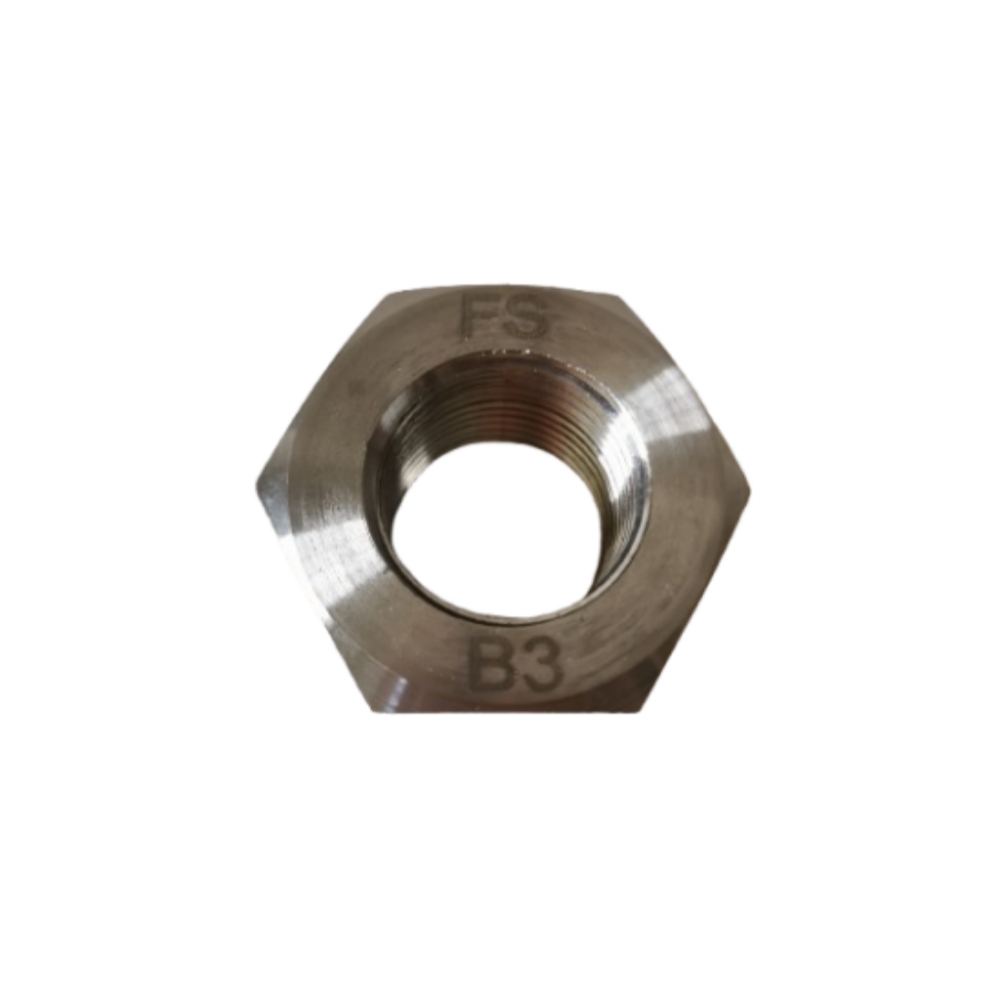
You must map fastener properties directly to specific industry outcomes. This mapping validates your intended application successfully before purchase. We see these premium alloys thrive uniquely in three primary industrial sectors.
Offshore Oil and Gas: You will find these fasteners securing critical subsea equipment. They clamp massive risers and deep-water structural platforms. Saltwater exposure remains constant and unforgiving in splash zones. Maintenance access is severely limited underwater. You need materials absolutely immune to marine degradation.
Desalination Plants (RO Systems): These facilities process massive volumes of seawater daily. They handle high-pressure, hyper-saline brine consistently. Lesser steel grades experience rapid pitting in these concentrated brine streams. The strong structural properties prevent catastrophic pressure leaks across massive flange joints.
Chemical Processing and Pulp/Paper: Manufacturing plants often utilize highly aggressive acidic solutions. Plant environments might contain heavy sulfuric or hydrochloric acid traces. Pulp digesters inherently trap active chlorides during operation. These trace chemicals aggressively attack standard stainless joints. The 2507 matrix delivers the necessary chemical inertness safely.
Experienced engineers understand the operational friction points of high-alloy fasteners. We must discuss these implementation realities transparently to ensure field success. Thread galling presents a significant operational risk during mechanical assembly. Super duplex threads remain highly susceptible to cold-welding under load. Galling happens when contact surfaces fuse entirely under high torque friction. This ruins the threaded joint instantly. Installers must then cut the hardware to remove it.
You must deploy strict mitigation strategies during field installation. Consider these proven operational protocols to prevent hardware destruction:
Apply premium nickel-based anti-seize lubricants generously across all threads before assembly.
Specify specialized baked-on coatings like PTFE for repetitive assembly environments.
Enforce strictly controlled, slow tightening speeds using properly calibrated torque wrenches.
Ensure mating threads remain entirely free of grit, debris, and machining burrs.
Temperature limitations also dictate your safe operational boundaries. You must respect the strict operational ceiling of 600°F (316°C). Exposure above this temperature triggers dangerous alpha-prime embrittlement. This phenomenon drastically reduces the alloy's impact toughness over time. The material becomes highly brittle. It might shatter unexpectedly under sudden mechanical shock loads if pushed past this thermal limit.
Procurement security represents a major concern for industrial buyers. You must trust your received materials completely before installation. Counterfeit or mislabeled alloys create severe operational and legal liabilities. We establish strict testing and traceability protocols for this exact reason. Positive Material Identification (PMI) serves as a non-negotiable standard. Always require localized PMI testing before granting order acceptance. Installers use an XRF gun to verify exact chemical signatures instantly.
You must also demand proper certification documents with every shipment. Highlight the absolute necessity of EN 10204 3.1 Mill Test Reports (MTRs). These MTRs verify the exact heat lot chemistry independently. They show the actual mechanical test results performed at the mill. They guarantee you receive genuine, fully compliant material.
Supplier evaluation criteria require careful, deliberate attention. What should you look for in a dependable manufacturer?
In-house testing capabilities: They should perform reliable hardness and tensile checks locally.
Documented quality management systems: Look for active ISO 9001 certifications to guarantee process control.
Exotic alloy experience: They must handle premium metals without dangerous cross-contamination. Dedicated machining cells prevent carbon steel dust from ruining duplex surfaces.
We can confidently summarize the incredible value of these specialized fasteners. Superior localized corrosion resistance makes them the definitive choice globally. The highly robust mechanical capabilities secure critical-path joints reliably. They thrive constantly in the most aggressive industrial environments imaginable.
Always use clear shortlisting logic before finalizing your purchase orders. Advise your engineering team to audit specific environmental conditions first. Check peak operating temperatures and document exact chloride concentrations. This foundational data ensures you finalize the correct specification confidently.
Are you ready to secure your next critical industrial assembly? Submit your technical drawings or environmental parameters to our team today. We offer expert engineering consultations and rapid custom machining quotes. Request an MTR sample review to verify our uncompromising quality firsthand.
A: UNS S32750 represents the Unified Numbering System designation for 2507 alloy. It serves as a globally recognized standard. This specific code guarantees strict chemical and mechanical requirements are met across different manufacturers. When you specify a UNS S32750 fastener, you ensure consistent performance regardless of geographic sourcing. It prevents vendors from substituting lesser, unverified duplex grades.
A: We strongly advise against mixing these materials. Pairing a super duplex nut with a standard 316L bolt creates severe galvanic corrosion risks. The less noble 316L bolt will sacrifice itself and corrode rapidly in an electrolyte like seawater. Furthermore, a severe mechanical mismatch exists. The massive yield strength of the nut can easily strip the weaker bolt threads under high torque. Always match 2507 bolts with 2507 nuts.
A: PREN stands for Pitting Resistance Equivalent Number. It operates as the standard metric for localized corrosion resistance. Super duplex 2507 typically boasts a PREN greater than 42. This exceptional rating matters immensely for nuts. Fastener threads inherently create tight crevices when assembled. These microscopic crevices are highly vulnerable to localized chloride attack. A high PREN guarantees the threads will survive without pitting.
A: Yes, they exhibit strong magnetic properties. This often surprises engineers accustomed to standard austenitic grades like 304 or 316, which are non-magnetic. The magnetic behavior stems directly from the alloy's dual-phase microstructure. Since 2507 contains roughly 50% ferritic steel, it actively attracts magnets. You can actually use a simple magnet test in the field to quickly differentiate super duplex from standard austenitic stainless fasteners.