Please Choose Your Language
close
Choose Your Site
Global
Social Media
Views: 0 Author: Site Editor Publish Time: 2026-06-23 Origin: Site


Fastener failure in aggressive environments leads to catastrophic downtime. Offshore platforms, chemical plants, and desalination facilities face severe safety hazards. However, over-specifying fastener materials bloats project budgets unnecessarily. Engineering teams must carefully balance safety margins against harsh procurement realities. Both duplex stainless steel grades offer excellent resistance to chloride stress corrosion cracking. Yet, their operational thresholds differ significantly. Their procurement costs vary just as much.
We will explore the exact metallurgical differences driving these limits. You will learn a data-driven framework for specifying heavy-duty fasteners accurately. We aim to help engineering and procurement teams make informed choices. You will decide exactly when a Super Duplex 2507 Nut is a strict necessity. We will also clarify when a Duplex 2205 nut is perfectly sufficient for your project requirements.
Corrosion Thresholds: The Super Duplex 2507 Nut delivers a Pitting Resistance Equivalent Number (PREN) of >42, making it mandatory for highly aggressive, high-temperature chloride environments, whereas Duplex 2205 (PREN ~35) handles standard marine and industrial applications.
Mechanical Strength: 2507 offers approximately 10-15% higher yield and tensile strength, allowing for higher torque specifications and load-bearing capacities in heavy-duty flanging.
Cost vs. Performance: A Duplex 2205 nut is significantly more cost-effective and widely available; 2507 should only be specified when the lifecycle cost of potential pitting/crevice corrosion outweighs the initial procurement premium.
Procurement Reality: Machining and threading 2507 is more tool-intensive, which can impact lead times for custom or large-diameter nuts compared to 2205.
Duplex stainless steels blend austenitic and ferritic microstructures. This dual-phase nature yields impressive mechanical strength. It also delivers robust corrosion resistance. We must map specific alloy features directly to real-world outcomes. Let us examine the core metallurgical differences. Chromium, molybdenum, and nitrogen contents dictate performance entirely.
Duplex 2205 (UNS S32205) serves as the primary industry workhorse. It contains roughly 22% chromium, 3% molybdenum, and 0.18% nitrogen. This baseline composition provides high yield strength. It offers good general corrosion resistance across many applications. You can rely on it confidently for standard marine use.
Super Duplex 2507 (UNS S32750) escalates these key alloying elements. It features 25% chromium, 4% molybdenum, and 0.24% nitrogen. These elevated levels drastically improve structural integrity. They specifically enhance thread shear strength. A Super Duplex 2507 Nut strongly resists thread stripping under extreme tension. This matters deeply in heavy-duty pressure vessel flanging.
Evidence-oriented data reveals stark differences between the two grades. A Duplex 2205 nut typically presents a minimum yield strength of 65 ksi. In contrast, 2507 boasts a minimum yield strength of 80 ksi. This represents a substantial mechanical upgrade. Higher yield strength dictates different torque-tension relationships. Installers must apply higher torque values for 2507 fasteners. This ensures proper bolt stretch. Incorrect torque parameters risk joint failure. We highly recommend consulting standard torque charts during installation.
Material Grade | Chromium (Cr) % | Molybdenum (Mo) % | Nitrogen (N) % | Min Yield Strength (ksi) |
|---|---|---|---|---|
Duplex 2205 (UNS S32205) | 22.0 - 23.0 | 3.0 - 3.5 | 0.14 - 0.20 | 65 |
Super Duplex 2507 (UNS S32750) | 24.0 - 26.0 | 3.0 - 5.0 | 0.24 - 0.32 | 80 |
How do we measure precise corrosion limits? We compare the Pitting Resistance Equivalent Number (PREN). We also analyze the Critical Pitting Temperature (CPT). These specific metrics define environmental suitability.
PREN calculates theoretical pitting resistance based on chemical composition. Higher numerical values indicate stronger resistance. A Duplex 2205 nut offers a PREN around 35. A Super Duplex 2507 Nut scores above 42. This gap translates to significant real-world survival advantages.
Standard environments rarely challenge 2205 fasteners. A Duplex 2205 nut performs flawlessly in moderate chloride concentrations. It tolerates temperatures up to its specific limit. The CPT for 2205 hovers safely around 35°C (95°F). Most coastal architectural projects and standard industrial processes stay below this threshold.
Extreme environments demand higher thermal thresholds. The Super Duplex 2507 pushes the CPT beyond 50°C (122°F). High-temperature chloride environments will rapidly destroy standard stainless steel. In these aggressive settings, 2507 becomes strictly mandatory. You cannot compromise on material selection here.
Crevice corrosion presents a unique threat to fastening systems. Bolted joints inherently create exceptionally tight spaces. The nut-to-bolt thread interface forms a severe crevice. Stagnant seawater easily enters these micro-gaps. Depleted oxygen levels inside the threads accelerate localized chemical attack. The higher molybdenum content in 2507 proves critical here. Molybdenum actively passivates the metal surface. It mitigates crevice corrosion risks effectively in stagnant conditions. Engineering teams must evaluate potential thread exposure carefully.
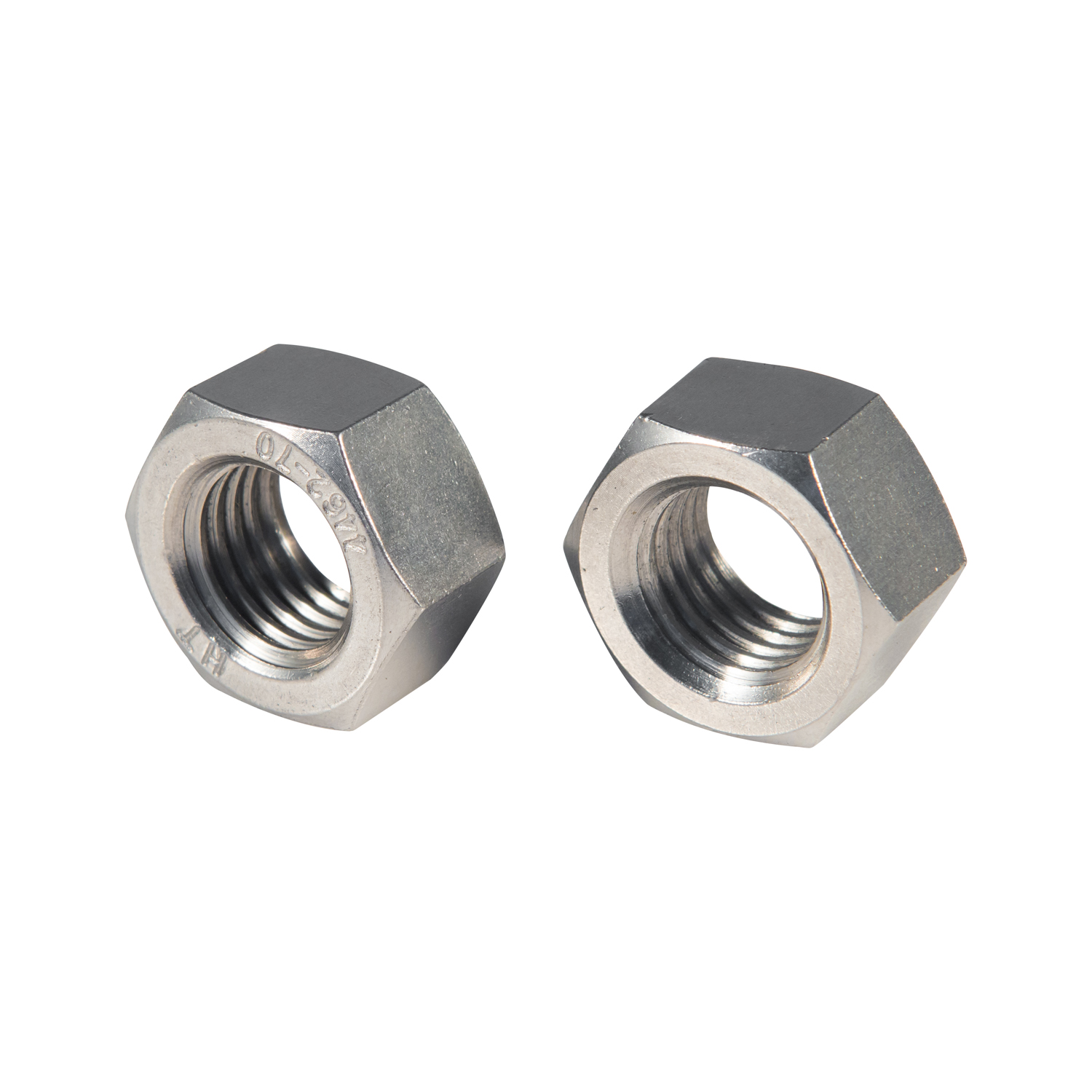
Different industries face distinctly unique environmental challenges. We must match the nut material to specific use cases. Over-specifying wastes capital. Under-specifying invites catastrophic mechanical failure.
When should you specify a Duplex 2205 nut? It suits pulp and paper processing perfectly. Standard desalination plants rely heavily on 2205 hardware. It also works beautifully for architectural marine applications. Low-temperature chemical transport systems benefit greatly from its balanced properties. These sectors require durable, cost-effective fastening solutions.
Conversely, certain industries mandate absolute maximum protection. You must specify a Super Duplex 2507 Nut for subsea oil and gas manifolds. Highly acidic chemical processing facilities require this robust upgrade. High-temperature scrubber systems operating in aggressive exhaust streams need 2507. Critical pressure vessel flanging demands unquestionable structural security.
Engineers must also consider specialized mechanical profiles. Heavy vibration affects many of these industrial sectors. Pairing an advanced material alongside a specialized design adds vital security. You might choose a nylon-insert lock nut. Alternatively, a prevailing torque lock nut resists spontaneous loosening. These mechanical designs complement the chemical resistance of the alloy. They ensure the fastener holds firm under severe dynamic loads.
Application Suitability Chart | ||
Application Environment | Recommended Material | Primary Reason for Selection |
|---|---|---|
Architectural Marine (Topside) | Duplex 2205 | Excellent general corrosion resistance; cost-effective. |
Standard Desalination Lines | Duplex 2205 | Handles standard chloride levels below 35°C perfectly. |
Subsea O&G Manifolds | Super Duplex 2507 | High PREN (>42) prevents crevice corrosion in stagnant seawater. |
Hot Acidic Chemical Processing | Super Duplex 2507 | High CPT withstands temperatures exceeding 50°C. |
Procurement teams face harsh commercial realities daily. Material selection involves much more than just reading metallurgical data. You must balance material availability, machinability, and overall project budgets.
Machinability poses a major manufacturing challenge. Super Duplex 2507 work-hardens very rapidly. It causes significant tool wear during internal threading operations. Machining nuts from 2507 bar stock requires specialized carbide tooling. It demands noticeably slower cutting speeds. This manufacturing difficulty extends lead times considerably. Non-standard sizes or custom thread pitches take much longer to produce.
Cost multipliers directly impact capital project budgeting. A Super Duplex 2507 Nut carries a noticeable price premium over a standard Duplex 2205 nut. Nickel and molybdenum market fluctuations often drive this price difference. Procurement teams must clearly justify this upfront cost. You can rationalize the premium through projected maintenance reduction. Fewer fastener replacements save money. Reduced plant downtime effectively justifies the initial material investment.
Availability separates the two grades in the open market. Distributors universally stock Duplex 2205. You can easily find standard hex and heavy hex profiles. Finding 2507 off the shelf proves more difficult. Large diameter 2507 nuts may require scheduled factory production runs. Project managers must account for these extended lead times during the planning phase. Always verify inventory before finalizing piping specifications.
Ignoring extended lead times for custom thread pitches on 2507 fasteners.
Failing to secure required mill test reports (MTRs) prior to purchase.
Overlooking rapid tool wear delays for large-batch 2507 manufacturing orders.
Specifying 2507 unnecessarily when the project budget strictly prohibits premium alloys.
Engineering decisions require rigorous evaluation criteria. We built a quick checklist for fastener specifiers. Follow these next-step actions to determine your ideal material quickly.
Identify the maximum operating temperature and chloride concentration. Check your process data thoroughly. If temperatures exceed 35°C in high chloride solutions, elevate your material choice immediately.
Determine required mechanical loads and clamping force. Calculate the anticipated tension carefully. Higher yield requirements might push you toward 2507 to prevent thread shearing.
Assess the cost of failure. Compare critical plant downtime against raw fastener replacement costs. Critical path equipment easily justifies premium fasteners.
Verify supply chain availability. Check for the required standard, such as ASTM A1082. Ensure your fastener supplier can meet project delivery deadlines.
We emphasize a balanced claim regarding material selection. Stronger and more resistant is not always better. It wastes capital if the specific application does not demand it. Specify materials accurately to protect project margins. A Duplex 2205 nut handles most industrial challenges efficiently. Reserve the Super Duplex 2507 Nut purely for truly severe, zero-compromise conditions.
Standard marine and industrial applications are well-served by the reliable Duplex 2205 nut. However, environments demanding zero-compromise pitting resistance necessitate the Super Duplex 2507 Nut. Engineering teams must evaluate chloride levels, operational temperatures, and mechanical tension requirements. You can prevent structural failures by selecting the appropriate grade.
Take actionable steps to optimize your next project:
Audit your existing fastener inventory to ensure material grades match environmental realities.
Update torque specifications based on the precise yield strength of your chosen duplex alloy.
Consult a specialized fastener metallurgist to review complex engineering drawings.
Submit your exact environmental parameters for an accurate quote and lead-time assessment.
A: Yes, you generally can. They possess excellent galvanic compatibility. They sit closely together on the anodic index, minimizing galvanic corrosion risks. However, you must carefully monitor thread galling. Mating dissimilar hardness levels can sometimes increase friction during installation. Always use appropriate anti-seize lubricants designed for stainless steel. Ensure your installation torque accounts for the differing yield strengths.
A: Yes. Super Duplex 2507 has a higher yield strength compared to standard 316 or 2205 stainless steel. You must recalculate torque specifications. Standard torque charts will not provide enough force to achieve proper bolt stretch. Applying incorrect torque risks vibrating loose or damaging the threads. Always consult an updated torque-tension chart specific to UNS S32750.
A: The primary standard is ASTM A1082. This specification covers high-strength duplex stainless steel nuts for special purpose applications. You will also find specific classes listed under ASTM A194. This covers carbon and alloy steel nuts for high-pressure or high-temperature service. Always verify the exact ASTM certification on your mill test reports.
A: Lead times differ significantly. Distributors commonly stock standard 2205 sizes in heavy hex configurations. You can often source them immediately. Conversely, 2507 frequently requires custom machining. Specialized profiles like flange nuts or lock nuts extend lead times further. Tool wear during 2507 manufacturing slows down production. Always factor extended delivery windows into your project schedule.