Please Choose Your Language
close
Choose Your Site
Global
Social Media
Views: 0 Author: Site Editor Publish Time: 2026-06-27 Origin: Site


Drilling deep, straight holes through thick timber presents a major challenge. Many professionals struggle when standard tools fail mid-job. Engineered wood and heavy beams demand specialized boring equipment. Standard twist bits often fail at depth due to poor chip extraction. They bind up quickly. Packed shavings clog the hole. This overheats your tools and wastes valuable time.
The wood auger bit offers a specific engineering solution. It pulls itself through thick material. It ejects waste continuously. This makes it the industry standard for timber framing, plumbing rough-ins, and heavy structural boring. We will break down exactly how these bits function. You will learn when to specify them over alternatives. We will also cover essential evaluation criteria to guide your next purchase.
Self-Feeding Design: The threaded lead screw eliminates the need for extreme downward physical pressure, relying instead on rotational torque.
Superior Chip Clearing: Deep, continuous flutes prevent binding and heat buildup in holes deeper than 2 inches.
High-Torque, Low-RPM Requirement: Best paired with low-speed, high-torque drills; inappropriate use at high speeds poses severe wrist injury risks from sudden bit binding.
Application Specificity: Ideal for structural rough-ins; not recommended for finish woodworking where a pristine exit hole is required.
Understanding tool mechanics helps you work more efficiently. These specialized bits rely on three primary components. Each part handles a distinct phase of the boring process. They work together to remove material smoothly. You do not need to push hard. The design does the heavy lifting for you.
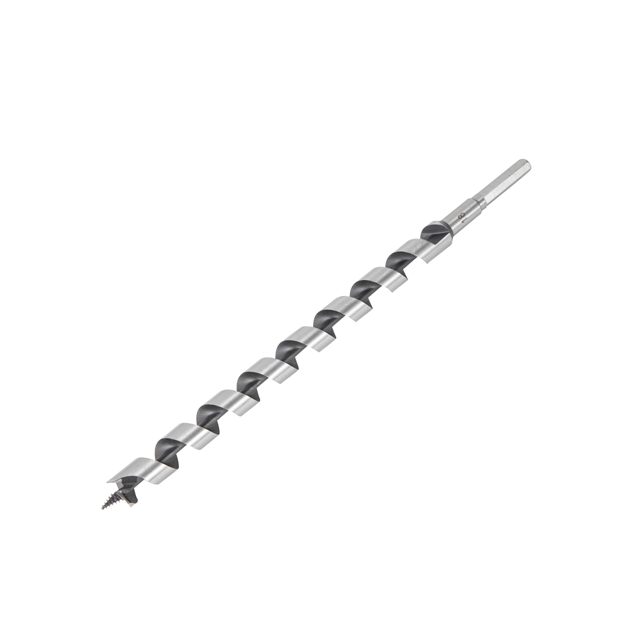
The tip features a finely threaded screw. Industry professionals often call this the gimlet point. It bites into the wood surface instantly. As the drill turns, the threads pull the wood auger drill bit forward. This creates a consistent feed rate. You experience less user fatigue because the tool provides the forward momentum. The aggressive pull requires a firm grip on the drill. If you push too hard, you can strip the wood fibers. Let the screw do its job.
The outer edge features sharp cutting spurs. They score the exact circumference of your hole before the main cutting lip engages. This scoring action severs the wood fibers cleanly. It drastically reduces grain tear-out on the entry point. You get a crisp, circular hole on the surface. Dull spurs will crush fibers instead of cutting them. You must protect these spurs during storage. Do not let them bang against other metal tools.
The hollow, deep-twist design acts like an Archimedes screw. It represents the core structural advantage of this tool. Deep spiral flutes continuously channel wood shavings out of deep cavities. You do not need to repeatedly back the drill out to clear waste. Machinists call this repeated backing out "peck drilling." Avoiding peck drilling saves significant time during framing. The open flute design also dissipates heat. It prevents the steel from losing its temper in dense hardwoods.
You have many options for drilling wood. Choosing the right tool prevents damaged materials and broken equipment. Let us look at how Wood Auger Bits compare to other popular choices on the job site.
Spade bits look flat and paddle-like. They are cheaper and faster for shallow holes. However, they require high user pressure. They wander easily if you hit uneven grain. You must push hard to force them through the material. Auger bits ensure straightness and self-feed. They lock onto their trajectory. Use a spade bit for quick, rough holes in 2x4 studs. Choose an auger for thick beams or when precise alignment matters.
Forstner bits leave flat-bottomed, cosmetically perfect holes. Cabinet makers rely on them for hinge installation. However, they cannot easily bore deep. Their enclosed design traps heat and chips rapidly. Auger bits excel at deep through-holes. You sacrifice internal cosmetic finish for depth and speed. Never use a Forstner bit for a ten-inch structural bore. It will burn the wood and ruin the temper of the steel.
Standard twist bits clog quickly in wood. Their shallow flutes cannot evacuate large, stringy wood chips. They pack full of waste, build up friction, and burn. Auger bits manage thermal limits via rapid chip evacuation. The deep gullets scoop waste away from the cutting edge instantly. You should reserve standard twist bits for metal or very thin wood applications.
Bit Type | Self-Feeding | Chip Clearing Ability | Primary Use Case | Max Practical Depth |
|---|---|---|---|---|
Wood Auger Bit | Yes | Excellent | Structural framing, thick posts | 18+ inches |
Spade Bit | No | Poor | Quick rough-ins (plumbing/electrical) | 2-3 inches |
Forstner Bit | No | Moderate | Cabinetry, flat-bottom holes | 1-2 inches |
Standard Twist | No | Poor (in wood) | General purpose, thin materials | 2-4 inches |
Not all boring tools offer the same performance. You must match the physical specifications to your daily tasks. Buying the wrong style leads to slipping chucks or inadequate reach. Consider the following criteria before outfitting your tool belt.
Assess Shank Design and Compatibility
Evaluate Material and Tempering
Calculate Required Flute Length
The shank connects the bit to your drill. It must handle immense rotational force without slipping. Modern power tools demand secure connections.
Hex Shanks: These prevent slipping in standard 3-jaw chucks under high-torque loads. They represent the standard for modern power tools. The flat sides give the chuck teeth a solid gripping surface.
SDS or Specialized Shanks: Heavy commercial jobs require rotary hammers. You must use these drills in drill-only mode. SDS shanks snap securely into these heavy-duty chucks without a key.
Tapered Square Shanks: These represent a legacy or niche application. Craftsmen use them strictly for manual hand braces. Do not attempt to chuck a tapered square shank into a modern electric drill.
Steel composition dictates tool lifespan. Carbon steel bits dominate the traditional market. They hold a wicked edge. You can easily sharpen them manually using a specialized auger file. High-Speed Steel (HSS) and impact-rated alloys offer extreme durability. They withstand the brutal, ratcheting force of modern impact drivers. Choose carbon steel for hand braces and standard drills. Choose impact-rated alloys if you exclusively use impact drivers.
You must accurately assess your required bore depth. Bits range dramatically in size. Standard "stubby" lengths fit between tight stud bays. Electricians love them for routing wire in confined spaces. Conversely, ship augers stretch to 18 inches or more. Timber framers use these massive tools for heavy posts. Always check the flute length. A bit might measure 18 inches overall, but only feature 12 inches of twist. You cannot easily drill deeper than the active flute length.
Heavy-duty boring carries physical risks. The aggressive nature of these tools demands respect. Understanding the forces at play prevents tool damage and physical injury. Follow safety protocols closely.
These bits bind aggressively. If they hit a hidden nail or dense knot, they stop instantly. The drill motor keeps turning. This transfers brutal rotational force directly to your wrists. This event is called kickback. You must use drills equipped with side handles. A long side handle gives you the leverage to resist this twist. Advanced modern drills feature anti-kickback clutches. These bind-up control systems sense sudden stops and cut the motor immediately. Never operate a large auger bit one-handed.
Speed is the enemy of heavy boring. These bits are designed for low-RPM, high-torque operation. You want a slow, steady, powerful rotation. Running them at high speeds in standard drill settings burns the cutting lips. High speed creates extreme friction. It also increases sudden-stop risks. Switch your drill to gear one. Maximize the torque output while keeping the RPMs low. Let the lead screw pull the tool naturally.
You must acknowledge the reality of tear-out. The entry hole looks perfect. The exit hole rarely does. Because the lead screw pulls the bit through the final layer aggressively, it bursts through the back. The exit hole will splinter terribly. You can prevent this by using a sacrificial board. Clamp a piece of scrap wood tightly against the exit side. Drill completely through your workpiece and into the scrap. This supports the wood fibers and guarantees a clean exit.
Different trades face distinct challenges. A plumber's daily routine looks nothing like a log builder's process. You should select tools specifically engineered for your environment. We have categorized the best choices based on professional applications.
Rough-in crews encounter hidden hazards constantly. Nails, screws, and staples lurk inside old studs. Standard carbon steel shatters upon impact. You must look for "nail-embedded" or "ship auger" bits. These feature heavy-duty single flutes. They utilize ruggedized cutting edges designed to survive accidental fastener strikes. A single-flute design also ejects large, wet chips better than double-flute versions. They prioritize durability over a perfectly smooth hole wall.
Timber framing demands precision. Your joinery relies on perfectly straight, clean holes. A wandering bore ruins expensive beams. You should prioritize traditional double-flute auger bits. The dual cutting edges provide maximum hole cleanliness. The double twist stabilizes the shaft inside the timber. This ensures straight-line accuracy over long distances. Log builders often rely on long, carbon-steel versions. They keep an auger file handy to touch up the spurs periodically.
Homeowners and general carpenters need versatility. You do not want to carry ten different specialized bits. Opt for an impact-rated, medium-length auger bit set. A 6-inch length handles most framing tasks. Standard hex shanks provide versatility across cordless drills and impact drivers. These sets balance durability, speed, and cost. They easily handle decking, fence posts, and minor rough-ins.
Trade / User | Recommended Bit Type | Key Feature | Flute Style |
|---|---|---|---|
Electricians / Plumbers | Ship Auger ("Nail-Embedded") | Survives hidden nails | Heavy Single Flute |
Timber Framers | Traditional Long Auger | High precision tracking | Double Flute |
DIY / General Handyman | Impact-Rated Stubby | Versatility | Medium Double Flute |
Wood auger bits are not general-purpose tools. They serve as specialized, high-efficiency material-removal instruments for deep boring. They solve the distinct problems of chip packing, tool wandering, and thermal buildup. Understanding their self-feeding mechanics prevents physical fatigue and protects your equipment.
Assess your primary drill’s torque capacity and chuck size before purchasing. Measure your maximum required hole depth carefully. Consider the hazards of your specific trade. Buy a rugged ship auger if you suspect hidden nails. Choose a traditional double-flute design for precise timber framing. Investing in the correct geometry guarantees safer, faster, and more accurate results on your next heavy-duty project.
A: Yes, if the bit is specifically impact-rated and features a 1/4-inch hex shank. Standard carbon steel bits may snap under the concussive force. Using an impact driver alters the traditional continuous cutting action into a rapid ratcheting process, which can be noisy but highly effective.
A: You use a specialized auger bit file. File only the upward-facing edge of the main cutting lips. File the inside faces of the scoring spurs. Never file the outside diameter of the spurs, as this shrinks the hole size and causes the bit to bind.
A: This usually happens due to a damaged or stripped lead screw. It can also occur if the screw threads become clogged with resin-heavy wood shavings. Clean the threads with a wire brush. If the screw tip is physically broken, you must replace the bit.
A: Standard wood augers cannot. They will instantly dull or shatter. Heavy-duty "nail-eater" ship augers can handle occasional soft nails hidden in framing lumber. However, no wood auger is meant for drilling through solid steel plates or heavy brackets.