Please Choose Your Language
close
Choose Your Site
Global
Social Media
Views: 0 Author: Site Editor Publish Time: 2025-10-27 Origin: Site


In industrial engineering, the reliability and safety of equipment often depend on the quality and performance of its fasteners. Among these, stud bolts play a critical role in maintaining integrity under demanding conditions. They are particularly indispensable in applications involving high pressure, extreme temperatures, and corrosive environments—common scenarios in petrochemical, power generation, and marine industries.
A stud bolt is a threaded rod with no head, typically threaded on both ends. Unlike conventional bolts, which have a head and a shank, stud bolts are inserted into a pre-drilled and threaded hole and fastened with nuts on both sides. This design provides a secure connection for flanged joints, pressure vessels, and heavy machinery.
Key Features:
Double-threaded ends for nut attachment
Uniform diameter along the length for consistent load distribution
Variety of lengths and diameters to accommodate different flange sizes and joint requirements
Compatibility with high-pressure gaskets and sealing systems
Stud bolts are widely used in pipeline flanges, valve assemblies, pressure vessels, and boiler applications, where precision, strength, and reliability are critical.
High-pressure systems, including pipelines, chemical reactors, steam lines, and pressure vessels, place extreme demands on fasteners. These systems are subjected to significant axial loads, shear forces, and dynamic stress, which can compromise the integrity of conventional bolts. Stud bolts are uniquely suited to these conditions due to their design, material strength, and load-handling capabilities.
One of the primary advantages of stud bolts is their ability to provide a uniform clamping force across flanged joints. Unlike traditional bolts, which may exert uneven pressure along the flange, stud bolts distribute tension evenly along the threaded rod. When nuts are tightened on both ends, this uniform force ensures that the gasket between flanges is compressed consistently, minimizing the risk of leaks, joint separation, or flange deformation.
For example, in a high-pressure steam line operating at hundreds of PSI, uneven bolt tension can lead to small gaps in the flange, causing steam leaks, energy loss, and potential safety hazards. By using stud bolts, engineers can ensure that each flange connection remains secure and leak-proof, even under fluctuating pressures.
Industrial machinery and pipeline systems often experience vibrations, pulsations, and thermal expansions due to fluid movement, pump operation, or mechanical equipment. Stud bolts, with their dual-nut configuration, provide superior resistance to loosening caused by these dynamic loads. The nuts on both ends create a locking effect, while the stud’s continuous shank maintains tension along its length, helping joints retain integrity under mechanical stress.
This feature is particularly valuable in chemical plants and refineries, where vibrations from pumps, compressors, or rotating equipment can otherwise lead to fastener fatigue or joint failure. Stud bolts effectively mitigate this risk, ensuring continuous operation without unplanned shutdowns.
High-pressure flanges are typically fabricated from alloy steels or stainless steels designed to withstand extreme pressures. Fasteners must match or exceed the mechanical properties of the flange material to maintain joint integrity. Stud bolts are available in high-strength grades, including ASTM A193 B7, B16, and A320 L7, providing the tensile strength and durability needed for critical applications.
These bolts resist elongation, fatigue, and fracture, even when subjected to repeated pressure cycles. This makes them the preferred choice in industrial sectors where failure of a single fastener could lead to catastrophic damage or safety incidents.
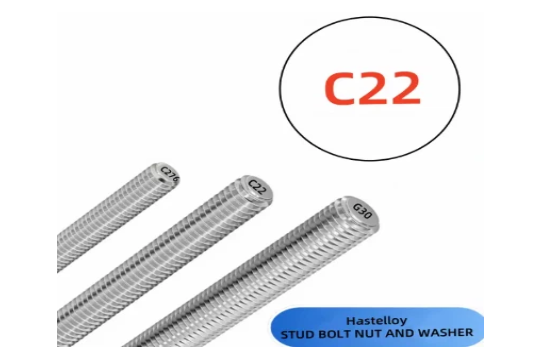
High temperatures, such as those found in steam boilers, heat exchangers, chemical reactors, and petrochemical plants, present additional challenges for fasteners. Stud bolts are specifically engineered to perform reliably under thermal stress, maintaining clamping force and joint integrity even in extreme environments.
Materials expand and contract under temperature fluctuations. In high-temperature applications, this can cause fasteners to loosen or gaskets to fail. Stud bolts, when properly selected for length and material, accommodate thermal movement while maintaining sufficient clamping force. This prevents leaks, minimizes maintenance needs, and ensures the safe operation of high-temperature systems over long periods.
For instance, in a boiler operating at 500°C, thermal expansion can exceed several millimeters. Stud bolts are designed to absorb this movement without compromising joint integrity, a critical factor for continuous, safe operation.
Stud bolts for high-temperature service are commonly made from alloy steels, stainless steels, or nickel-chromium-molybdenum alloys. These materials offer excellent creep resistance, tensile strength retention, and corrosion resistance at temperatures up to 600°C (1112°F) or higher. By using the appropriate material, engineers ensure that bolts maintain their mechanical properties over long operational cycles, reducing the risk of failure due to heat-induced weakening.
Replacing fasteners in high-temperature, high-pressure environments is costly, time-consuming, and potentially hazardous. High-quality stud bolts designed for these conditions provide long-term reliability, maintaining their strength, tension, and resistance to corrosion even after years of continuous operation. This reduces downtime, lowers maintenance costs, and enhances the overall safety and efficiency of industrial systems.
The choice of material is critical to ensure that stud bolts withstand combined high-pressure and high-temperature conditions. Common materials include:
Material Type | Application Features |
Carbon Steel | Economical, suitable for moderate pressure and temperature |
Alloy Steel (e.g., ASTM A193 B7) | High tensile strength, used in high-pressure piping |
Stainless Steel (e.g., 304, 316) | Corrosion resistance, suitable for chemical or marine environments |
Nickel Alloys (e.g., Inconel 625) | Extreme temperature and corrosion resistance, used in petrochemical plants |
Duplex Stainless Steel | High strength and corrosion resistance, ideal for chloride environments |
Selecting the appropriate material involves considering pressure class, operating temperature, corrosive environment, and mechanical stress.
Stud bolts come in a variety of lengths, diameters, and thread pitches, depending on the application. Key design aspects include:
Thread Type: Coarse threads for high-strength applications; fine threads for precision fittings.
Length: Sufficient to allow proper nut engagement on both ends while maintaining clamping force.
Diameter: Matched to the pressure rating and mechanical stress requirements of the flange or joint.
Standards such as ASME B16.5, ANSI B1.1, and ASTM specifications guide the dimensions and tolerances of stud bolts for industrial applications.
Proper installation of stud bolts is crucial for performance and safety in high-pressure and high-temperature systems.
Applying the correct torque and preload ensures that the stud bolt maintains clamping force without over-stressing the threads. Using calibrated torque wrenches and following manufacturer specifications is essential.
Threaded connections are often lubricated to reduce friction, achieve uniform torque, and prevent galling—a common problem in stainless steel bolts. High-temperature lubricants may be used for heat-intensive applications.
When tightening multiple stud bolts on a flange, a crisscross or star pattern is recommended to ensure uniform compression of the gasket and even load distribution.
Regular inspection for tension loss, corrosion, and deformation helps prevent joint failures. In critical applications, torque re-checks and non-destructive testing (NDT) may be conducted to ensure long-term reliability.
Stud bolts are used extensively across industries where safety, pressure containment, and temperature resistance are critical.
Stud bolts secure flanges on pipelines, valves, and pressure vessels in refineries and gas processing plants. The combination of high pressure, corrosive fluids, and high temperatures demands bolts that meet strict material and dimensional standards.
In steam turbines, boilers, and heat exchangers, stud bolts maintain critical joints under extreme thermal cycles and pressure variations, ensuring safe operation of the plant.
Chemical reactors and storage tanks require corrosion-resistant stud bolts to withstand aggressive chemicals at elevated temperatures, preventing leaks and ensuring continuous production.
Stud bolts used in offshore platforms and ships must resist saltwater corrosion, high loads, and fluctuating temperatures. Duplex stainless steel and nickel alloys are common choices for such environments.
Stud bolts offer several advantages over conventional bolts in demanding industrial applications:
Uniform Load Distribution: Reduces the risk of joint failure and gasket blowouts.
High Strength: Can withstand extreme pressures and heavy mechanical loads.
Corrosion and Temperature Resistance: Suitable for harsh and high-temperature environments.
Ease of Maintenance: Nuts can be removed without disturbing the equipment, facilitating repairs.
Customizable Lengths and Grades: Suitable for a wide range of flanges, pipelines, and machinery.
These benefits make stud bolts an indispensable component in critical industrial systems.
In high-pressure and high-temperature applications, stud bolts are more than simple fasteners—they are critical components that ensure safety, reliability, and efficiency. Their unique design, material versatility, and ability to maintain uniform load distribution make them essential for flanged joints, pressure vessels, and critical industrial machinery.
Selecting the right stud bolt involves considering material, diameter, length, thread type, and installation procedures. When properly specified and installed, stud bolts can provide years of dependable service, minimizing downtime, maintenance costs, and safety risks.
For businesses and engineers seeking high-quality, reliable stud bolts for industrial, petrochemical, power generation, and marine applications, www.jsfastool.com offers a wide range of products designed to meet stringent performance and safety standards. Their expert guidance and durable fasteners make them a trusted partner for professionals looking to ensure the integrity of critical systems.