Please Choose Your Language
close
Choose Your Site
Global
Social Media
Views: 0 Author: Site Editor Publish Time: 2025-10-31 Origin: Site


In industrial operations, the smallest components often play the most significant roles. Among these, stud bolts stand out as critical elements in construction, manufacturing, and maintenance across multiple sectors. While they might appear simple at first glance, stud bolts are engineered to meet rigorous demands, ensuring structural integrity, operational safety, and long-term durability. This article explores what stud bolts are, their industrial applications, and the advantages they bring to modern facilities.
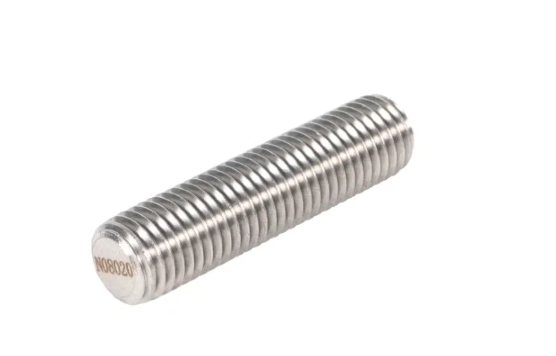
Stud bolts are threaded fasteners without a head, designed to be installed with nuts at both ends. Unlike traditional bolts, which feature a head on one end, stud bolts rely on nuts and washers to secure the connection. Typically manufactured from carbon steel, stainless steel, or alloy materials, stud bolts can withstand extreme pressures, high temperatures, and corrosive environments.
A standard stud bolt includes:
Threaded Ends: Both ends are threaded to accept nuts.
Shank: The unthreaded portion of the bolt, if present, helps with alignment.
Material Grade: Determines tensile strength and corrosion resistance.
Stud bolts vary depending on industrial requirements:
Full-Thread Studs: Threaded along the entire length, suitable for adjustable installations.
Tap-End Studs: One end is threaded for installation; the other end remains smooth for alignment.
Heavy Hex Studs: Designed for high-pressure environments with extra strength.
Stud bolts are highly versatile components, making them indispensable across a wide range of industries. Their ability to provide secure, high-strength connections in critical applications has made them a preferred choice for engineers and maintenance teams. From pipelines and pressure vessels to heavy machinery and construction frameworks, stud bolts play a crucial role in ensuring structural integrity, operational safety, and long-term reliability.
One of the most common and essential applications of stud bolts is in pipeline systems, particularly for connecting flanges. Industrial pipelines often carry high-pressure fluids, gases, or chemicals, and connections must endure constant stress, pressure fluctuations, and temperature changes. Stud bolts allow flanges to be fastened securely while maintaining the flexibility to disassemble the connection for maintenance or inspection.
In addition, pipelines are subject to vibrations caused by fluid movement or pump operation. Stud bolts, when combined with appropriate nuts and washers, help distribute the load evenly across the flange, minimizing the risk of leaks or joint failure. This reliability is particularly critical in oil and gas, chemical processing, and water treatment industries, where failure could lead to costly downtime or environmental hazards.
Pressure vessels, widely used in chemical plants, refineries, and power generation facilities, rely heavily on stud bolts for structural integrity. These vessels operate under extreme pressures and temperatures, often containing gases or liquids at levels that could be dangerous if containment fails. Stud bolts provide the tensile strength necessary to keep flanges and closures tightly sealed, preventing leaks, equipment damage, or catastrophic accidents.
The reliability of stud bolts in these applications is enhanced by selecting the proper grade of material, such as high-strength alloy steel, which can withstand repeated thermal expansion and contraction cycles without loosening. Maintenance is simplified as well since the bolts can be removed without damaging the vessel’s structural threads.
In heavy industrial machinery, stud bolts are critical for assembly, alignment, and operational stability. Components such as pumps, compressors, turbines, and gearboxes generate vibrations and torque that can compromise standard fasteners. Stud bolts, with their dual-nut fastening system, ensure that parts remain aligned and secure, even under dynamic loads.
Additionally, machinery components often require periodic disassembly for inspection, cleaning, or part replacement. Stud bolts allow this maintenance to occur efficiently without compromising the integrity of threaded connections, saving both time and operational costs.
Stud bolts also play a pivotal role in structural engineering projects, including steel frameworks, bridges, and large platforms. They provide robust, reliable connections capable of supporting both static and dynamic loads. Unlike conventional bolts, stud bolts ensure uniform tension distribution, reducing the risk of structural deformation under stress.
In bridge construction or high-rise buildings, stud bolts are often used in conjunction with high-strength nuts and washers to maintain stability under changing loads, wind pressure, and seismic activity. Their predictable performance enhances both safety and longevity in demanding environments.
Marine and offshore structures, such as oil rigs, ships, and coastal platforms, are exposed to harsh environments, including saltwater, high humidity, and temperature variations. Stud bolts made from corrosion-resistant alloys, such as stainless steel or specially coated carbon steel, are essential in these conditions.
These bolts maintain strength and reliability despite prolonged exposure to corrosive elements. Their robust design reduces the need for frequent replacements, ensuring operational continuity and lowering maintenance costs in offshore facilities.
Selecting stud bolts over conventional bolts or screws offers numerous advantages for industrial operations. Understanding these benefits helps engineers and maintenance teams make informed decisions for their projects.
Stud bolts are engineered to handle high loads and resist fatigue, making them suitable for demanding industrial applications. When combined with heavy-duty nuts and washers, they distribute stress evenly across the joint, reducing the likelihood of failure. This is particularly valuable in high-pressure pipelines, pressure vessels, and structural frameworks where reliability is critical.
A major advantage of stud bolts is their reusability. Since the nuts can be removed without disturbing the embedded threads, maintenance becomes simpler and more cost-effective. Equipment can be disassembled and reassembled multiple times without degrading the integrity of the connection, which is particularly useful in machinery, pipeline systems, and pressure vessels requiring routine inspections or part replacements.
Stud bolts ensure precise alignment of components, which is crucial in pipelines, pressure vessels, and industrial machinery. Misaligned components can lead to operational inefficiencies, mechanical wear, and potential safety hazards. Stud bolts maintain accurate positioning, preventing misalignment even under heavy loads or high vibrations.
Industrial machinery and pipelines frequently experience vibration during operation. Stud bolts are designed to resist loosening under vibration, ensuring that equipment remains secure. This reduces the risk of operational downtime caused by fastener failure and minimizes safety hazards associated with loose connections.
Stud bolts are compatible with a wide range of materials, including steel, aluminum, composites, and specialty alloys. This versatility allows engineers to select the most suitable bolt for specific environmental or mechanical requirements, whether it’s chemical resistance, high-temperature tolerance, or load-bearing capacity.
Choosing the right material for stud bolts is critical for ensuring longevity and safety.
Carbon steel stud bolts are widely available and cost-effective. They are suitable for moderate pressure and temperature applications and can be coated for improved corrosion resistance. Carbon steel remains a reliable choice for many industrial installations, particularly in environments with controlled exposure to moisture or chemicals.
Stainless steel offers high corrosion resistance, making it ideal for chemical processing, food production, and marine applications. It provides moderate to high tensile strength and is capable of withstanding exposure to moisture, saltwater, and other corrosive agents without compromising performance.
Alloy steel stud bolts are engineered for extreme environments, including high-pressure pipelines, high-temperature vessels, and heavy machinery. These bolts are often heat-treated to enhance strength, ensuring reliable performance under demanding conditions. They are commonly used in petrochemical plants, power generation facilities, and industrial manufacturing.
To further improve corrosion resistance and durability, stud bolts can be coated with zinc, nickel, or PTFE. These coatings are essential for outdoor installations or highly corrosive industrial environments, such as offshore platforms or chemical plants, extending the life of the fastener while maintaining performance.
Proper installation is key to the longevity and safety of stud bolts:
Torque Control: Ensure nuts are tightened to manufacturer-specified torque to prevent over- or under-tightening.
Lubrication: Use appropriate lubricants to reduce friction and avoid galling.
Alignment Checks: Verify that components are aligned before final tightening.
Periodic Inspection: Regularly inspect bolts for wear, corrosion, or loosening to maintain safety standards.
Many industrial applications must comply with regulatory standards for safety. Correct selection and installation of stud bolts contribute to:
OSHA and ANSI compliance in machinery and construction.
Reduced risk of mechanical failures or hazardous leaks.
Safe maintenance procedures with easily removable fasteners.
When sourcing stud bolts for industrial use, consider:
Material certification and compliance with international standards.
Range of sizes and threading options.
Ability to provide corrosion-resistant or specialty alloy options.
Technical support and guidance for installation and maintenance.
Reliable suppliers ensure consistent quality, timely delivery, and expert advice, helping facilities maintain operational efficiency and safety.
Stud bolts may seem like small, unassuming components, but their role in industrial settings is critical. From pipelines and pressure vessels to heavy machinery and structural frameworks, stud bolts provide unmatched strength, precision, and reliability. By understanding their applications, advantages, and material considerations, industrial operators can make informed choices that improve safety, reduce maintenance costs, and enhance operational efficiency.
For those looking to source high-quality stud bolts for industrial projects, www.jsfastool.com offers a comprehensive selection of durable and reliable stud bolts. Their expertise ensures that facilities can meet both performance and safety requirements without compromise.