Please Choose Your Language
close
Choose Your Site
Global
Social Media
Views: 0 Author: Site Editor Publish Time: 2026-08-28 Origin: Site


Deep-hole wood drilling requires specialized tooling. Standard twist drills routinely fail during timber framing, utility work, or residential rough-ins. They simply cannot clear chips fast enough or pull themselves through dense materials. Selecting the wrong cutting edge geometry creates significant structural and mechanical problems. You risk excessive tear-out, jammed flutes, sudden tool stalling, and severely shortened bit lifespans. Poor choices also increase user fatigue and safety risks on the job site.
This article provides a comprehensive technical evaluation of modern cutting edge designs. We will help you match specific tip geometries, spurs, and flute styles to your exact application. You will learn how to pair these features with your existing power tool capabilities for optimal performance. By understanding these mechanics, you ensure cleaner cuts, reduce equipment strain, and ultimately achieve a much more efficient workflow.
Spur Count Dictates Finish: Single-spur designs prioritize aggressive, fast boring in rough carpentry, while double-spur geometries deliver clean, tear-free holes necessary for timber framing and finish work.
Thread Pitch Controls Feed Rate: The design of the lead screw directly dictates how aggressively the bit pulls itself through the wood, impacting both user fatigue and the torque requirements of the drill.
Material and Coating Matter: Advanced High-Speed Steel (HSS) and anti-friction coatings reduce heat buildup during continuous, deep-hole drilling, extending the life of the cutting edge.
Tool Compatibility is Critical: Selecting a wood auger drill bit requires matching the shank style (e.g., quick-change hex) and the aggressiveness of the cutting edge to the power output of the drill or impact driver.
Understanding the specific components of the cutting head is absolutely crucial. Without this knowledge, buyers risk purchasing tools optimized for the wrong material. You might also select a geometry unsuited for your desired finish quality. When purchasing quality Wood Auger Bits, you must evaluate three primary components working together.
Every effective wood auger relies on these essential parts to function properly:
The Guide/Feed Screw: This threaded tip pulls the bit deeply into the wood. It completely eliminates the need for high downward pressure from the operator.
The Scoring Spur(s): These sharp outer edges slice the wood fibers cleanly. They perform this action before the main cutting lip removes the bulk material. This prevents surface tear-out.
The Cutting Lip (Chipper): This angled blade acts like a rotating chisel. It carves out the waste material. It then feeds those chips directly into the flutes for ejection.
Implementation reality dictates that wear on any single component drastically alters performance. A damaged feed screw stops pulling the bit forward. A dull scoring spur causes massive splintering on exit holes. You must monitor these parts closely. Maintaining sharp edges ensures safe and efficient operation over time.
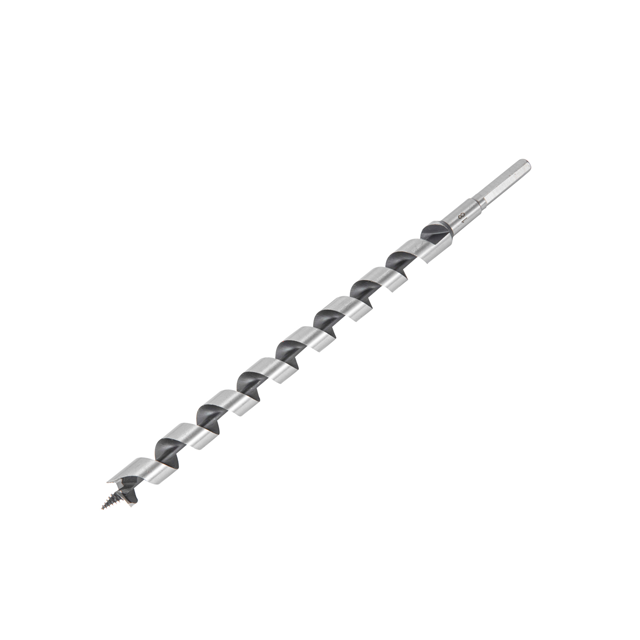
We must compare the two dominant cutting edge designs available today. Manufacturers engineer these variations for entirely different applications. Choosing between them determines your speed, finish quality, and required torque.
Single-spur designs feature one continuous scoring edge and one primary cutting lip. This asymmetrical configuration aggressively hogs out material. Plumbers, electricians, and rough framers rely heavily on this geometry. It guarantees high-speed boring and rapid chip clearance.
These bits also handle hidden hazards better. Nail-cutting augers typically utilize a modified single-spur or even a spurless design. They tolerate impacts that would easily shatter delicate double-spur models. The tradeoff involves a much rougher hole entry and exit. Tear-out is common and generally accepted in rough-in applications.
Double-spur geometries feature two scoring edges and two opposed cutting lips. This layout provides balanced, highly symmetrical cutting action. Timber framers, log home builders, and fine woodworkers demand this design. It delivers extremely clean entry holes. It also minimizes blowout or splintering when exiting the workpiece.
However, double-spur bits require significantly more torque to drive. They engage more surface area simultaneously. They are also much more fragile if they strike hidden metal. You must operate them carefully in clean, predictable lumber.
Table 1: Single-Spur vs. Double-Spur Comparison
Feature | Single-Spur | Double-Spur |
|---|---|---|
Cutting Speed | Extremely fast and aggressive. | Slower, more controlled feed. |
Hole Finish | Rough, prone to splintering. | Clean, precise, tear-free. |
Torque Required | Moderate to high. | Very high. |
Nail Tolerance | High (especially specific bi-metal models). | Low (easily chips or shatters). |
Primary Users | Plumbers, electricians, framers. | Timber framers, fine woodworkers. |
The feed screw serves as an automatic propulsion system. You must carefully evaluate its thread pitch against the power tool you intend to use. Pitch simply refers to the distance between individual threads. It dictates the overall feed rate.
A coarse thread pitch features fewer threads per inch. This design pulls the tool rapidly through softwoods. It maximizes boring speed on deep-hole projects. However, it presents distinct risks.
An aggressive pitch can easily stall underpowered drills. It forces the bit into the wood faster than the motor can clear the chips. It can also cause severe wrist injury if the bit binds suddenly. Manufacturers do not recommend coarse threads for high-speed use. You must maintain strong physical control.
Fine thread pitches pull the tool much slower. This gives the cutting lips more time to clear dense materials. They work exceptionally well in highly resinous hardwoods. They require less instantaneous torque from the motor.
This conservative design makes them much safer for handheld, non-impact drills. You reduce the risk of violent stalling. The slower feed rate also translates to a slightly smoother inner bore.
Some large-diameter models feature removable lead screws. This acts as a premium design upgrade. It extends the functional lifespan of the tool considerably. The fine threads of a lead screw often wear out first. Allowing users to replace the fastest-wearing part maximizes your initial investment.
Once the cutting edge removes the material, flute design takes over. Flute architecture dictates how efficiently chips are ejected from deep holes. This directly impacts heat generation and friction. When inspecting a Wood Auger Drill Bit, you will encounter two primary styles.
The solid center design features a thick central shaft. The flutes wrap tightly around this solid core. This traditional configuration provides several specific characteristics:
Maximum Rigidity: The thick core prevents the bit from flexing under load.
High Precision: It keeps the tool perfectly straight in very deep holes. Timber framers rely on this for perfectly aligned peg holes.
Slower Chip Ejection: The reduced flute volume means chips travel up the shaft slower. You must clear the hole periodically.
The hollow center design features a much thinner central web. The flute forms a wide, sweeping single twist. This architecture focuses purely on bulk material removal:
Massive Throat Capacity: The wide gap accommodates heavy, curled chips easily.
Rapid Clearance: It efficiently ejects debris from the deepest cavities.
Wet Wood Performance: It excels in wet or treated lumber. Chips in these materials tend to pack and bind in solid center designs.
Standard high-carbon steel options are incredibly cheap. However, they dull rapidly in abrasive hardwoods or modern engineered lumber. Advanced metallurgy solves these degradation problems directly. Friction generates intense heat during continuous boring. That heat destroys cutting edges.
Manufacturers often upgrade their premium lines to High-Speed Steel (HSS). Some even utilize cobalt-blended cutting edges. These advanced alloys maintain their temper at much higher drilling temperatures. The metal retains its critical hardness. This prevents the cutting lips from folding or rounding over during heavy use.
Coatings play a vital role in deep-hole efficiency. Manufacturers apply PTFE (Teflon) or black oxide finishes. These treatments prevent pitch and resin build-up. They keep the cutting edge and flutes completely clean.
You should remain skeptical about permanent coating claims. Coatings inevitably wear off over time due to abrasive wood fibers. They do not replace the need for proper drill speeds. You still must hone the edge occasionally to maintain peak performance.
Framing lumber frequently conceals old nails or screws. Standard edges shatter upon impact. Specialized bi-metal or carbide-tipped cutting edges solve this common hazard. Engineers design them specifically to survive incidental contact with framing nails. They shear the metal without completely destroying the primary tool geometry.
Consolidating these variables requires actionable purchasing steps. You must strictly match the bit geometry to your primary power tool. Mismatched tools lead to broken shanks, burned motors, or ruined workpieces.
For Cordless Impact Drivers: You should choose single-spur, hollow-center bits. Ensure they feature a 1/4-inch hex shank. You absolutely require impact-rated metallurgy here. Standard steel will snap off inside the impact driver chuck under heavy rotational hammering.
For Heavy-Duty Corded Drills: These operate at low RPMs but deliver massive torque. Double-spur, solid-center bits perform perfectly here. Look for robust 7/16-inch hex shanks. They provide maximum control. They deliver perfectly clean holes in large timbers.
For Hand Braces: Traditional woodworking relies on manual power. You must look for traditional Jennings-pattern styles. They require tapered square shanks to fit the brace chuck properly. Fine-pitch lead screws are mandatory to keep manual pulling forces manageable.
Next-Step Action: Always verify the chuck size and torque rating of your primary drill. Do this before selecting the diameter and cutting edge aggressiveness. This ensures safe operation and protects your equipment.
Chart 1: Application Matching Guide
Tool Type | Recommended Shank | Ideal Flute Architecture | Preferred Spur Design |
|---|---|---|---|
Impact Driver | 1/4" Hex (Impact Rated) | Hollow Center (Irwin) | Single-Spur |
Heavy Corded Drill | 7/16" Hex | Solid Center (Jennings) | Double-Spur |
Manual Hand Brace | Tapered Square | Solid Center (Jennings) | Double-Spur (Fine Thread) |
The overall effectiveness of a wood auger drill bit depends entirely on its cutting edge geometry. There is no universally perfect design. There is only the right design for your specific task.
As you evaluate your options, keep these action-oriented next steps in mind:
Prioritize single-spur, heavily fluted designs for speed and rough-in work.
Reserve double-spur, fine-threaded designs for precision joinery and timber framing where hole quality matters most.
Match your chosen bit directly to the torque output and chuck style of your power tool.
Regularly inspect and gently hone the inside of the cutting lips to maintain performance.
A: Yes. Using an auger bit file or a small diamond paddle, you can hone the inside of the cutting lips and the inside of the scoring spurs. Never file the outside of the spurs, as this reduces the bit's overall diameter and causes binding in the hole.
A: This usually happens when the feed screw is too aggressive for the drill's torque output, or the flutes are completely jammed with chips. Back the bit out periodically to clear the hole, or switch to a tool with a lower gear and higher torque.
A: Generally, no. Standard wood auger bits have a threaded feed screw designed to aggressively pull the bit. In a stationary drill press, this pulling action can violently lift the workpiece right off the table. Use brad-point or Forstner bits for drill presses instead.