Please Choose Your Language
close
Choose Your Site
Global
Social Media
Views: 0 Author: Site Editor Publish Time: 2026-08-28 Origin: Site


Drilling deep holes in thick timber often presents a frustrating mechanical challenge for craftsmen. You might quickly experience severe chip packing, excessive friction, and sudden bit binding. This disrupts your workflow completely. It also risks permanently damaging valuable tools and expensive workpieces. Standard twist bits lack the necessary spatial capacity to eject waste over these long distances. They simply cannot push material out fast enough before clogging. Fortunately, specialised tools rely on specific flute geometries to act as highly effective mechanical conveyor systems. This article analyzes how different flute designs impact chip evacuation efficiency. We will help you evaluate and select the right tool based on solid mechanical specifications rather than flashy marketing claims. You will learn exactly how to match flute geometry to your specific project needs to avoid dangerous binding.
Volume vs. Finish: Single-flute designs prioritize maximum chip clearance for deep boring, while double-flute designs prioritize hole finish at the expense of chip capacity.
Surface Friction: The internal finish of the flute (milled, polished, or coated) determines whether resinous or wet wood chips will stick or slide.
Pitch Angle: The twist rate of the flute dictates the speed of material extraction and the required torque from the drill.
Operator Dependency: Even premium flute designs require proper RPM management and occasional "pecking" in high-moisture woods to prevent catastrophic binding.
Wood behaves uniquely when cut. Wood fibers expand aggressively when severed from the main structure. As you cut deeper into a log or beam, these fibers compress tightly inside the restricted space of the drill hole. This physical expansion leads directly to sudden mechanical blockages. Heavy chips accumulate faster than they can physically escape. They form dense, immovable plugs inside the bore. Once a plug forms, your tool stops cutting immediately. It starts rubbing against the wood walls instead. This friction creates a dangerous cascading effect.
The temperature rises rapidly against the hole walls once chips pack tightly. This intense heat builds up in mere seconds. Hot steel melts natural wood resins instantly. The melted pitch then coats the metal surface, acting exactly like superglue. Your drill binds catastrophically as a result. We see this frequent failure in resinous species like pine or Douglas fir. Softwoods produce stringy waste. Hardwoods produce finer dust. Both types will eventually pack and burn if the flute geometry fails to clear the debris efficiently.
Standard tools fail repeatedly in deep applications. Twist bits and spade bits feature very shallow flute capacities. They work exceptionally well for fast, superficial holes in sheet goods. However, they completely lack the deep, continuous channel found on high-quality Wood Auger Bits. Without that continuous conveyor belt, waste stays permanently trapped at the bottom of the bore. You simply cannot force a standard twist design through a 12-inch post without stopping constantly.
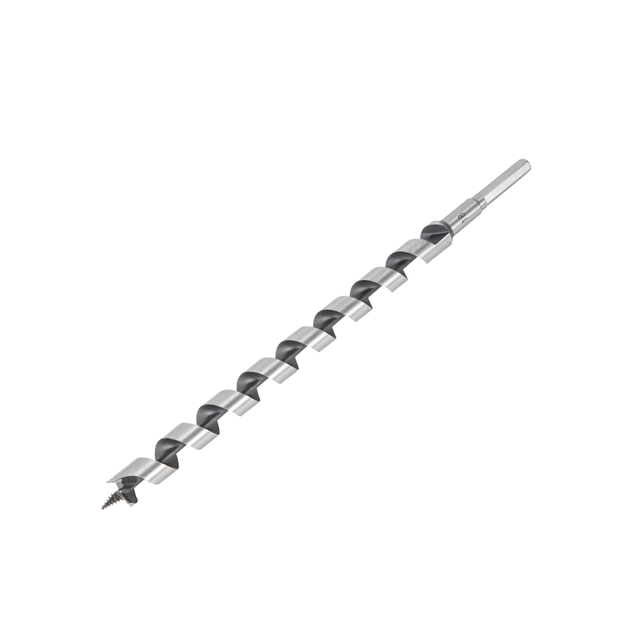
Understanding internal geometry helps you choose the correct tool. This design features a single, deep channel wrapping around a hollow center or a minimal core. It maximizes the internal open space available for waste. By removing the central steel mass, manufacturers create a massive highway for debris.
Pros for Deep Boring: It offers the absolute highest volumetric capacity for chip extraction on the market. You will find it ideal for aggressive drilling tasks requiring immense material removal. Utility poles, large timber framing projects, and thick structural beams demand this exact capacity. The hollow center allows massive, continuous waste clearance without stalling.
Trade-offs: They often leave rougher entry and exit holes due to the aggressive single cutting edge. The missing central mass also makes them slightly less rigid than solid-center alternatives. You must control your feed rate carefully to prevent the bit from wandering off center.
These bits feature two distinct cutting edges feeding into two separate flutes. The flutes wrap tightly around a thick, solid central shaft. This central core provides immense structural stability during operation.
Pros for Precision: Higher rigidity keeps the tool tracking perfectly straight over long distances. The solid core prevents the cutting head from wandering in dense, unpredictable grains. They produce a significantly cleaner hole wall. Fine woodworkers strongly prefer this crisp finish.
Trade-offs: The solid center drastically reduces the total open volume inside the flute. Chip packing becomes much more likely because the waste has less room to travel. Holes deeper than 6 inches require frequent clearing to prevent binding. The solid core sacrifices evacuation speed for pinpoint accuracy.
The twist rate acts exactly like the thread pitch on a mechanical screw. Aggressive or fast pitches move chips out rapidly. However, they demand high-torque, low-RPM drills to overcome their aggressive bite into the wood. Shallow pitches require much less torque from your motor. They eject material slower but offer smoother, more controlled operation in extremely hard materials. You should match the pitch to your drill motor capabilities.
Standard milled finishes work acceptably for dry, dimensioned lumber. Unfortunately, they remain highly prone to friction buildup. Rough milling marks catch microscopic wood fibers easily. Polished or ultra-smooth finishes reduce the friction coefficient dramatically. They prevent damp or sappy chips from adhering to the flute walls. The slick surface keeps the conveyor belt moving continuously.
Manufacturers often apply PTFE (Teflon) or black oxide coatings to their tools. We must assess their practical value carefully in real-world scenarios. Coatings prevent resin buildup perfectly during the initial cuts. Yet, raw hardened steel with a high polish often outlasts coated versions over years of heavy use. Abrasive wood fibers eventually scratch and wear off any coating. Once compromised, a coated tool performs worse than a smoothly polished bare steel alternative.
Flute Surface Finish Comparison
Finish Type | Friction Level | Best Application | Durability |
|---|---|---|---|
Standard Milled | High | Dry, softwoods, shallow holes | Excellent (Solid steel) |
Ultra-Smooth Polished | Very Low | Wet timber, resinous woods, deep boring | Excellent (Resists wear) |
PTFE Coated | Extremely Low | Highly resinous pine, quick tasks | Moderate (Coating wears off) |
Even the best engineering cannot overcome bad drilling habits. Real-world conditions require constant operator awareness. "Green" or wet wood creates heavier, stickier chips. These swollen, sticky fibers defeat even optimal flute designs easily. They glue themselves to the steel instantly. They require specific operator interventions to manage safely. Wet timber binds faster than dry lumber because the heavy chips refuse to slide up the extraction channel.
A strict inverse relationship exists between your tool size and safe drill speed. Running large tools at high RPMs causes severe burning rather than cutting. High speeds generate extreme heat regardless of your flute design. Slower speeds keep the cutting edges cool and actively engaged. We recommend running large diameters strictly under 600 RPM. This gives the flute enough time to carry the heavy chips upward safely.
Operators must physically withdraw the tool periodically during deep cuts. This manual action clears the flutes mechanically in deep or dense hardwood applications. Pecking actively resets the mechanical conveyor. You lift the tool out entirely, dump the trapped waste, and plunge back into the hole. It prevents catastrophic binding effectively. Experienced framers automatically peck every few inches of depth. You cannot rely on the flute alone for continuous 12-inch depths.
Matching your tool to your specific job prevents most failures. You should categorize your needs carefully before buying. Follow these distinct application guidelines:
For Timber Framing & Log Cabins: Prioritize single-flute, ultra-smooth designs. Look for aggressive lead screws. They ensure deep, continuous chip clearing through massive timbers. You need maximum waste removal speed here.
For Fine Woodworking & Furniture: Prioritize double-flute, solid-center designs. Hole straightness and perfectly clean walls completely outweigh extreme depth capacity here. You want a pristine finish for dowels or visible joinery.
For Construction & Rough-In: Standard solid-center Wood Auger Drill Bit designs offer the best durability-to-cost ratio. They handle repetitive, medium-depth drilling exceptionally well. Tradesmen benefit from their ruggedness during daily rough-in tasks.
Flute design is the single most critical factor in a wood auger bit's ability to drill deep without binding.
Buyers should align the flute configuration (single vs. double) and surface finish precisely with their primary wood type (wet vs. dry) and depth requirements.
Never default to the most expensive option automatically; mechanical suitability matters more than price.
Mastering basic techniques like RPM control and periodic pecking extends the life of any flute design significantly.
A: Bits get stuck because chips accumulate in the flute faster than they extract. The waste exceeds the flute's extraction rate. This physical blockage causes severe friction. Wet wood, sappy resin, or running the drill at excessive RPMs exacerbates this problem quickly.
A: Single flute designs perform significantly better in wet wood. They offer superior open volume inside the channel. This extra space allows wet, heavy, and stringy chips to pass upward without clogging the tool.
A: No, you do not strictly need a coated tool. While PTFE coatings reduce resin adhesion initially, a highly polished bare steel flute works equally well. Polished steel is often more durable over the long term because coatings eventually scratch and wear away.
A: You can clean resin easily using citrus-based solvents or dedicated blade cleaners. Spray the solvent onto the flute, let it soak for a few minutes, and wipe away the pitch. This restores the slick surface and maintains optimal chip evacuation efficiency.