Please Choose Your Language
close
Choose Your Site
Global
Social Media
Views: 0 Author: Site Editor Publish Time: 2026-08-28 Origin: Site


Wood auger bits generate massive rotational torque compared to standard twist drills. If the shank doesn't perfectly mate with the tool's chuck, the result is severe slippage, damaged equipment, or ruined workpieces. Evaluating a Wood Auger Drill Bit isn't just about the flute design or the screw tip. It requires matching the shank geometry to the specific power or hand tool being used. Overlooking this connection leads to dangerous binding and costly project delays. Plumbers, electricians, and woodworkers must understand how chuck jaws interact with various shank profiles under heavy loads. Our objective is to provide a definitive, no-nonsense evaluation of hex, square taper, straight, and SDS shanks. You will discover exactly how each design handles torsion. Consequently, buyers can confidently pair the right bit with their existing equipment.
Hex shanks (particularly 7/16" and 1/4") are the modern standard for power drills and impact drivers, preventing torque slippage.
Square taper shanks remain strictly for traditional hand braces; using them in modern power tools via adapters often results in dangerous runout (wobble).
Fully round shanks are highly prone to slipping under the load of an auger bit; opt for straight shanks with machined flats.
SDS-plus shanks are viable for heavy timber framing, provided the rotary hammer is strictly set to "drill-only" mode.
We must understand the physics of wood boring before purchasing any new accessories. A mismatch between the bit shank and the tool chuck introduces severe project delays. It also causes rapid tool wear and significant operator fatigue. You cannot treat augers like standard twist drills. The unique design actively pulls the bit forward.
The aggressive lead screw of a wood auger acts as a self-feeding mechanism. It pulls the cutting edges deeply into the wood fibers. This constant, unyielding forward motion generates extreme rotational resistance. You need a shank physically incapable of spinning inside the chuck. If the jaws cannot hold the metal tightly, the drill motor applies power while the bit remains stuck.
Failing to secure the bit correctly carries steep professional costs. You will encounter several frustrating failure modes on the job site. We typically see three main consequences:
Cam-out events: The chuck jaws lose their grip during critical drilling phases, ruining momentum.
Scored shanks: Slipping jaws quickly grind deep grooves into the softer steel of the bit shank.
Safety hazards: Sudden bit bind-up in deep timber framing violently twists the operator's wrists.
If the chuck slips, you lose total control over the boring process. Quality control demands a mechanical lock between the tool and the accessory. We strongly advise analyzing your drill's torque transfer capabilities before buying new Wood Auger Bits.
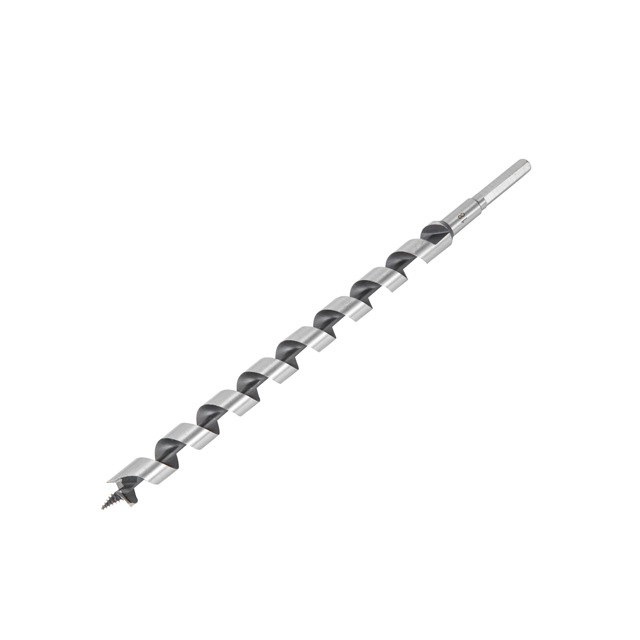
Hexagonal shanks dominate today's fast-paced job sites. You will find them primarily in quick-change 1/4-inch, 3/8-inch, and heavy-duty 7/16-inch sizes. Their geometric shape mechanically prevents the bit from spinning in three-jaw chucks. The chuck jaws press flat against the six sides of the shank. This creates an interlocking hold. They also fit directly into modern impact drivers for rapid bit swaps.
Evaluating hex shanks requires looking at your primary drive tool. The industry divides these shanks into two distinct evaluation criteria:
1/4-inch hex: Ideal for smaller diameters. They perfectly match standard impact drivers used by residential carpenters. The grooved detent locks securely into quick-release collets.
7/16-inch hex: Necessary for heavy-duty augers. Electricians and plumbers rely on these thicker shanks. They seamlessly integrate into high-torque right-angle drills like the Hole Hawg.
However, you must acknowledge a specific implementation risk. Cheaper, poorly machined hex shanks often fail under extreme load. Subpar steel compresses or deforms slightly when subjected to maximum torsion. These deformed shanks frequently get jammed inside quick-release chucks. We advise investing in high-quality tool steel. Premium materials resist deformation and slide out easily after heavy use.
Tapered square ends represent a deeply traditional tool design. Manufacturers engineer them exclusively for the two-jaw alligator chuck of a manual hand brace. They provide maximum mechanical lock for low-RPM manual boring. You often see them utilized in heritage woodworking, antique restorations, or off-grid timber framing.
The feature-to-outcome ratio here is unmatched for hand tools. The square taper flares outward slightly. As you tighten the hand brace, the jaws clamp down over the wedge shape. This design firmly traps the bit. It transfers high manual torque without any slipping. The operator gains immense tactile feedback while boring through dense hardwoods.
We must issue a strong skeptical note regarding modern adaptations. Many DIYers attempt to modernize these vintage tools. We strongly advise against buying square taper bits intending to use a power-tool adapter. Adapters inevitably introduce excessive tolerance stacking between the chuck, the sleeve, and the bit. This stacking leads to severe bit wobble. Runout destroys hole accuracy and risks snapping the bit. Keep traditional designs paired strictly with traditional hand tools.
Cylindrical shanks provide a standard fit for three-jaw drill presses or basic power drills. However, a perfectly round shank is an objective liability on any wood auger bit. The aggressive pull of the lead screw demands extreme grip. Under heavy feeding loads, round metal easily slips inside standard chucks.
We recommend a highly effective mechanical fix. Only purchase straight-shank auger bits featuring three machined flats. Manufacturers mill three flat sections directly into the base of the cylindrical shank. These flats allow the three chuck jaws to seat completely flush against the metal. This design smartly mimics the anti-slip benefits of a true hex shank while maintaining a round profile.
These bits have specific scalability limitations. They work best reserved for drill presses or older corded drills. A pure hex shank might not center perfectly in older, worn drill press chucks. The three-flat design ensures perfect concentric rotation. You achieve superior accuracy while maintaining exceptional rotational grip. Never accept a fully round shank for deep wood boring tasks.
The Slotted Drive System (SDS) offers a robust solution for extreme conditions. You typically see them deployed in large-scale construction, log cabin building, and utility pole drilling. They provide absolute retention and rapid bit changes. Workers using heavy rotary hammers benefit immensely from this slotted design.
Performance remains unmatched for deep, wide boring in wet timbers. The tool chuck features internal ball bearings. These bearings slide into the recessed slots on the SDS shank. They securely lock the bit in place while allowing slight forward and backward movement. This mechanism entirely eliminates rotational slip, even when encountering dense knots.
However, a critical implementation rule exists for this category. Operators must ensure the tool is set strictly to "rotary only" mode. You must disable the hammer action completely before touching the wood. Using hammer mode will instantly shatter the lead screw. The violent impact force also destroys the delicate cutting spurs of the bit. Treat the rotary hammer solely as a high-torque spinning motor when using wood augers.
Applying an equipment-first logic makes your purchasing process highly straightforward. Start by examining the specific power tools you already own. Never buy a bit hoping it fits; buy the bit engineered for your exact chuck.
Tool and Shank Compatibility Matrix
Drive Tool Type | Recommended Shank Type | Primary Application Context |
|---|---|---|
Impact Driver (1/4" Collet) | 1/4" Hex | Standard residential framing, cabinet installations, and DIY tasks. |
Right-Angle Drill / Hole Hawg | 7/16" Hex | Plumbing pipe runs, heavy electrical rough-ins, and joist drilling. |
Manual Hand Brace | Square Taper | Heritage woodworking, furniture restoration, and off-grid timber framing. |
Standard Drill Press | Straight Shank (3 Flats) | Precision workshop joinery, dowel holes, and fine furniture making. |
Rotary Hammer (Drill Mode) | SDS / SDS-Plus | Log home construction, utility poles, and heavy landscaping timbers. |
Always verify quality indicators before finalizing your purchase. Look closely for one-piece forging. The shank and the flute should be milled from a single, continuous steel blank. You want seamless structural integrity from the tip down to the base.
Avoid items where the manufacturer welded a shank onto the flute. Welded joints create a weak point in the tool. These seams often snap suddenly under high torsion, leaving half the bit buried inside a stud. Inspecting the bit body ensures long-term reliability and job site safety. Additionally, check the heat treatment specifications. A properly hardened shank resists scoring and prevents the chuck jaws from chewing up the metal.
Selecting the perfect shank type is entirely dictated by your drive tool. Hex shanks clearly offer the most versatility for modern professionals. They prevent slipping and maximize torque transfer in impact drivers. Conversely, square tapers remain irreplaceable for hand-tool specialists seeking authentic craftsmanship. Straight shanks require machined flats to prevent dangerous rotational slip in drill presses. Finally, SDS options dominate the heavy-duty timber framing sector when used strictly in rotary mode.
Take action before starting your next structural framing project. First, audit your current power tools to identify the exact chuck type. Next, measure the maximum chuck capacity of your drills to ensure clearance. Finally, invest exclusively in one-piece forged bits to avoid catastrophic breakage under heavy load.
A: No. Impact drivers require a 1/4" or 7/16" hex shank. Round shanks require a 3-jaw chuck. Attempting to use adapters often causes excessive wobble and ruins hole accuracy.
A: You are likely using a fully round shank without machined flats under high torque, or your chuck jaws are worn. Upgrading to a hex shank or a 3-flat straight shank resolves this slipping issue.
A: Highly discouraged. Antique bits are often made of softer steel designed for low manual RPMs. Cutting the shank ruins the historical tool and risks bending the bit dangerously at high power-drill speeds.